
Key Takeaways
- Left-turn collisions account for 53% of crossing-path crashes and are the leading cause of fatal motorcycle accidents.
- T-bone impacts from left-turn collisions cause severe injuries, including broken bones and head trauma to riders.
- Motorcyclists lack protective barriers like car frames, making them extremely vulnerable during side-impact collisions.
- Drivers frequently misjudge motorcycle speed and distance, leading to dangerous left-turn decisions at intersections.
- Visual obstructions, blind spots, and driver distractions increase the likelihood of failing to notice approaching motorcyclists.
Why Left-Turn Crashes Are Especially Deadly for Motorcyclists
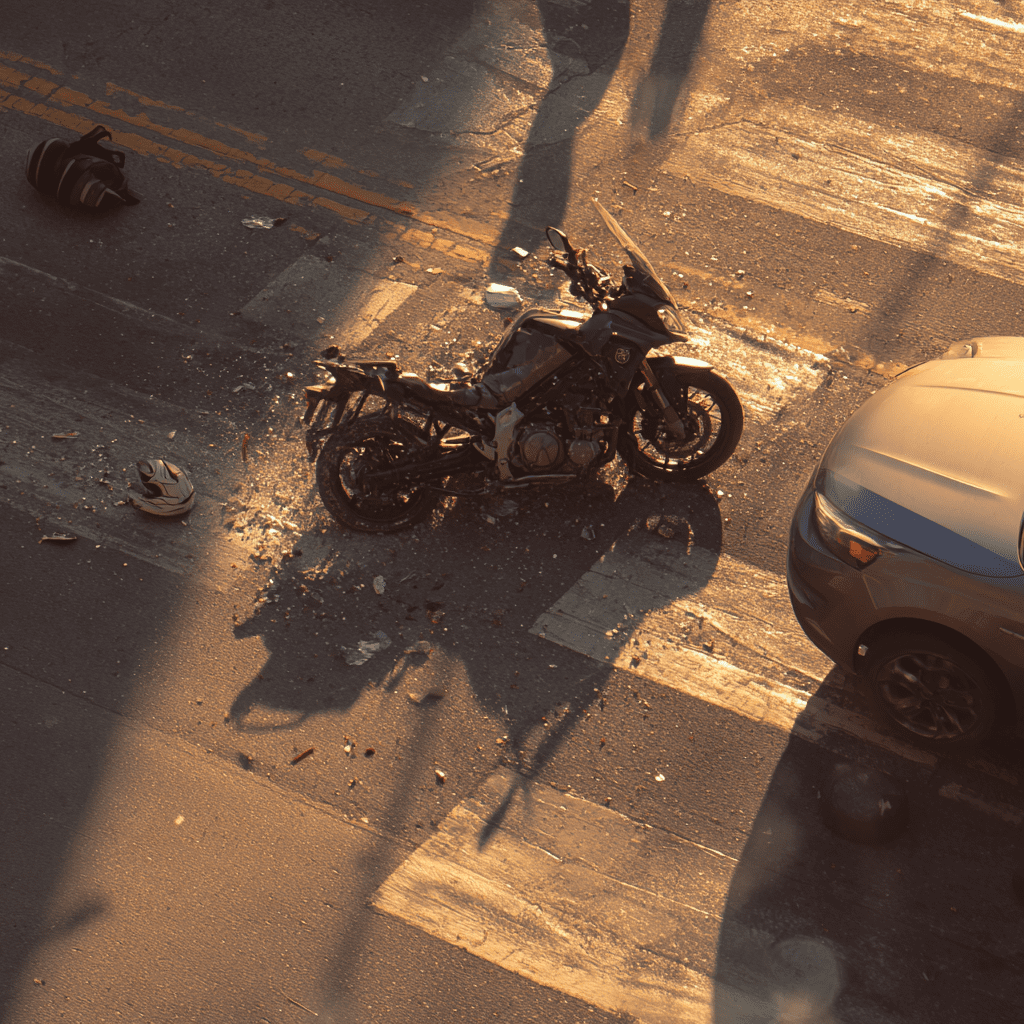
When you’re riding a motorcycle through an intersection, left-turn collisions represent your greatest statistical threat, 53% of crossing-path crashes involve left turns, making them the leading cause of fatal motorcycle accidents. These crashes typically produce T-bone impacts where you’re struck broadside, generating forces that cause broken bones and severe head trauma.
As a rider, you’re part of a community that understands these risks intimately. Left-turn collisions account for a disproportionate share of rider fatalities, making defensive positioning and heightened intersection awareness vital survival skills.
Common Reasons Drivers Turn Left in Front of Bikers
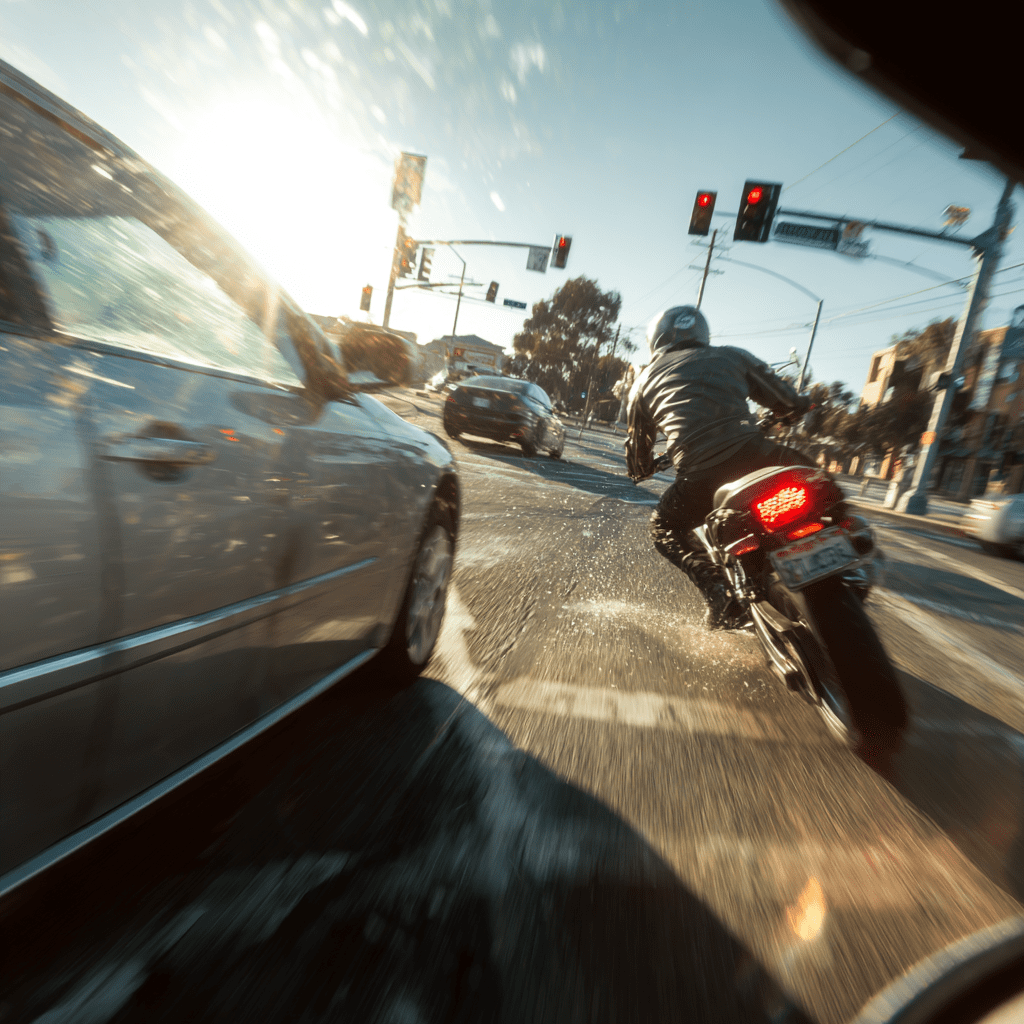
- Speed and distance misjudgment: Drivers underestimate their approach velocity, calculating gaps based on car-sized profiles rather than motorcycles.
- Visual obstructions: Sun glare, parked vehicles, and construction zones create blind zones that conceal your presence entirely.
- Distraction-induced blindness: Phone use and in-cabin adjustments divert attention precisely when drivers should be scanning for oncoming traffic.
- Inadequate blind spot checks: Many drivers skip thorough mirror and shoulder checks before committing to turns.
These behaviors create the dangerous conditions you’ve likely witnessed firsthand within our riding community.
Where Left-Turn Motorcycle Collisions Happen Most Often
Certain intersections function as statistical danger zones for motorcyclists facing left-turn collisions. NHTSA data reveals that left turns represent approximately 53% of crossing-path crashes involving motorcycles, making these locations critical to your safety awareness.
In Florida, these crashes often happen at congested intersections, arterial roads, shopping-center entrances, and freeway on-ramps where drivers are making quick judgment calls. If you’ve been injured in a Florida left-turn motorcycle accident, the location of the crash can matter when reconstructing what happened and who had the right-of-way.
How Riders Can Protect Themselves at Intersections
Because left-turn collisions pose such significant risks, you’ll need to adopt specific defensive strategies that reduce your vulnerability at intersections. Every left-turn motorcycle encounter demands your full attention and proactive measures.
Here’s what you should implement for enhanced motorcycle safety:
- Cover your brakes when approaching intersections to minimize reaction time
- Scan the front wheels of waiting vehicles for early movement indicators
- Establish eye contact with drivers to confirm they’ve registered your presence
- Position yourself in the left third of your lane to maximize visibility
You’re part of a community that understands these risks firsthand. Wearing high-visibility gear further distinguishes you from busy backgrounds, particularly in urban settings. These evidence-based tactics aren’t just recommendations; they’re proven countermeasures that keep riders like you safer.
What To Do After a Left-Turn Motorcycle Accident
Even if you’ve followed every defensive strategy, accidents can still occur, and your actions in the immediate aftermath directly impact both your health outcomes and legal standing.
When a driver makes a left turn in front of you, your response matters. Document everything methodically and connect with fellow riders who’ve navigated similar situations. You should also obtain an official crash report, which becomes key evidence in a Florida left-turn motorcycle accident claim
| Priority | Action | Why It Matters |
|---|---|---|
| Immediate | Seek medical care | Documents hidden injuries |
| Scene | Photograph everything | Preserves critical evidence |
| Contacts | Gather witness information | Strengthens your claim |
Frequently Asked Questions
Where Do 70% of Motorcycle Accidents Occur?
You’ll find that 70% of motorcycle accidents occur at intersections. As a rider, you’re facing the highest risk where left-turn collisions dominate, accounting for 53% of crossing-path crashes and leading to fatalities.
Why Are Left Turns So Dangerous?
Left turns force drivers to cross traffic lanes, misjudge your speed, and overlook your smaller profile. You’re facing T-bone impacts without protective barriers, which is why these collisions account for 53% of crossing-path motorcycle crashes.
What Is the Most Dangerous Turn for a Motorcyclist?
Left turns are your most lethal liability. Perilous path-crossing collisions comprise 53% of motorcycle crashes. You’re vulnerable when drivers misjudge your speed, executing dangerous turns across your trajectory. Your riding community loses too many to these preventable incidents.